

Live Challenges
Soil restoration solutions
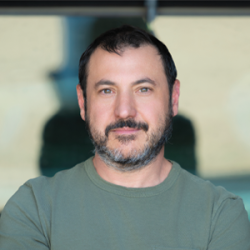
“Around the world, soil degradation is holding back the potential productivity & sustainability of the farms we all depend on. We want to collaborate with innovators that have novel solutions for soil restoration so that we can put them in the hands of farmers to solve this grand challenge.”
Matthew Wallenstein, Chief Soil Scientist, Syngenta
Background
Syngenta is seeking breakthrough technologies that accelerate the restoration of degraded or abandoned cropland so these lands can once again support productive and profitable crop production. We are interested in innovations that stimulate or support the natural processes that rebuild soil function and in products that directly mitigate soil impairments to restore functionality at scale.
Past agricultural practices have resulted in soils that are compacted, saline, depleted of organic matter, poorly drained or eroded. These conditions reduce productivity and profitability. Syngenta scientists are looking for cutting-edge solutions that can reverse these conditions by restoring the physical, chemical and biological functions of soil.
Our primary focus is on improving the functionality of the soil itself to create optimal conditions for crop growth. We are therefore seeking soil-applied technologies that act on the soil, rather than plant-centric solutions that simply allow crops to tolerate poor conditions.
Applicable innovations may be chemical, physical or biological in nature, provided they have a clear mechanism for restoring or enhancing soil function.
What we're looking for
We are looking for breakthrough, soil-applied technologies that can accelerate the restoration of degraded cropland by directly improving the soil’s physical, chemical or biological functions.
Submissions should:
- Enhance the processes that rebuild soil function such as increasing stable organic matter, improving water infiltration and retention, restoring nutrient cycling, or re-establishing beneficial and active microbial communities
OR
- Directly mitigate soil impairments such as salinity, compaction or poor drainage when this leads to improved soil function.
- Be applicable at field or farm scale using practical deployment methods.
- Show a clear mechanism of action on the soil itself, not just on plants.
- Have potential to deliver measurable improvement in soil function within a few cropping seasons.
We especially value breakthrough solutions that:
- Have early proof of concept or field data demonstrating improvement of key soil indicators such as SOC, infiltration and microbial activity.
- Clearly describe the soil conditions, climates or cropping systems where the solution performs best.
- Are potentially scalable and economically feasible for large-acreage deployment.
- Are compatible with farm operations and regulatory frameworks.
- Offer potential for longer-term persistence of improvements rather than only short-term effects.
We are not seeking:
- Plant-centric solutions that do not directly modify soil properties such as plant biostimulants, seed coatings or varieties that tolerate poor soils without improving them.
- Standard practices already widely used such as cover crops, no-till or manure/compost unless they are part of a novel mechanism or delivery system.
- Conventional inputs such as standard fertilizers, lime or gypsum without an innovative mode of action.
- Technologies whose primary benefit is improving plant performance in suboptimal soils rather than improving the soil itself.
What we can offer you




Work with us to help with our challenge
Our people are specialists: they are innovators, scientists, engineers, technologists, regulatory experts and data scientists in multiple fields.