
Research focus areas
Great ideas can come from anywhere.
Our Research Focus Areas define where we're concentrating our scientific expertise to unlock the next generation of agricultural innovation. These are priorities where we're aiming to develop breakthroughs and push the boundaries of science.
To make this possible, we're looking for partners who share our ambition.
By collaborating, we can advance discoveries faster and turn them into innovations for farmers everywhere.

“At Syngenta we continually challenge ourselves to bring better innovation to growers. We collaborate with the best in the world to inspire our scientists with technologies and digital approaches, and bring scientific breakthrough to reality.”
Martin Clough, R&D Head Digital, Collaboration and Sustainability
What we're looking for
Enabling science and technologies
Areas of interest include:
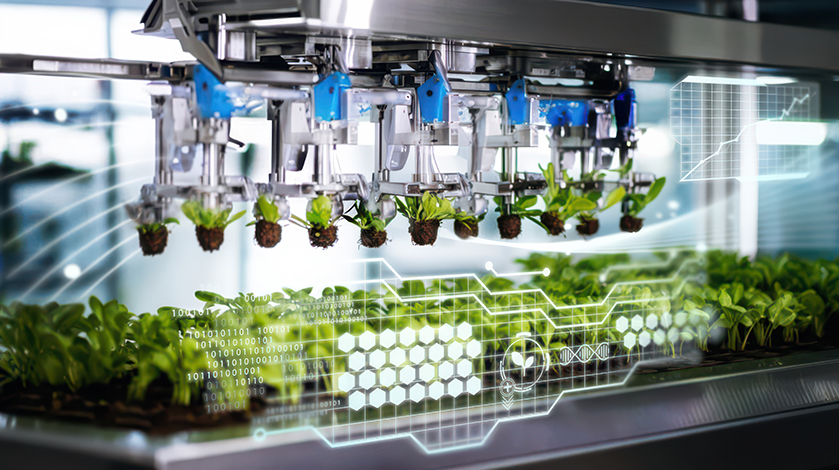
Advanced research platforms
- High-throughput phenotyping and genotyping platforms for rapid phenotypic and genetic analysis.
- Automation technologies to revolutionize research workflows.
- Multi-omics technologies for comprehensive biological understanding.
- AI/ML modeling approaches to transform data into actionable insights.
Screening and characterization
- Ability to characterize the biological effects of novel synthetic molecules and biological agents.
- Understanding of the factors contributing to the biological effects we observe.

Crop protection
Areas of interest include:
Accelerating the design, discovery and optimization of novel chemical active ingredients
- Novel chemicals for control of weeds, plant pests, disease and to enhance crop quality and resilience to stress.
- Capabilities for synthesizing and optimizing novel bioactive chemicals.
Formulation
-
Technologies to better formulate chemical active ingredients, improving their sustainability, and enabling more precise application.
Product and environmental safety
- Identifying, understanding and modeling potential toxicological and environmental risks associated with chemical active ingredients at an early stage of their development.
Biologicals
Areas of interest include:
Accelerating the design, discovery and optimization of novel biological active ingredients. These could be living microbes, natural chemicals, natural extracts or biomacromolecules such as proteins, peptides and nucleic acids
- Biologically derived actives for insect, disease, nematode, and weed control.
- Biological solutions that improve crop growth, yield, resilience to abiotic stress, and enhance nutrient uptake.
- Activity and scaling production of novel biological active ingredients.
Formulation
- Innovative delivery systems and advanced formulation technologies to enhance sustainability, and enable precise application of biological active ingredients.
Product and environmental safety
- Identifying, understanding and modeling potential toxicological and environmental risks associated with biological active ingredients at an early stage of their development.

Digital solutions
Areas of interest include:
Remote sensing and field data capture
- Satellites for multispectral/hyperspectral imaging, UAVs/drones for high-resolution field mapping and ground-based sensors (proximal sensing for soil characteristic and climate).
AI-Driven crop intelligence
- Artificial intelligence and machine learning applications such as deep learning for image classification, computer vision for crop monitoring, predictive analytics for yield forecasting, pattern recognition for disease detection, machine learning for pest identification.

Professional solutions
Areas of interest include:
Discovery, development and optimization of novel chemical or biological active ingredients for non-agricultural usage to:
- Control weeds, plant diseases insect pests and rodents.
- Enhance tolerance to environmental stresses, reduce water usage and optimize
nutrient uptake.
Assisting professionals to manage their spaces sustainably, through innovative technologies and systems
- Enabling automation, monitoring and prediction of potential weed, pest and disease infestations before they become obvious.

Unlocking By-Product Streams: Novel Bioactives for Plant Abiotic Stress Tolerance